
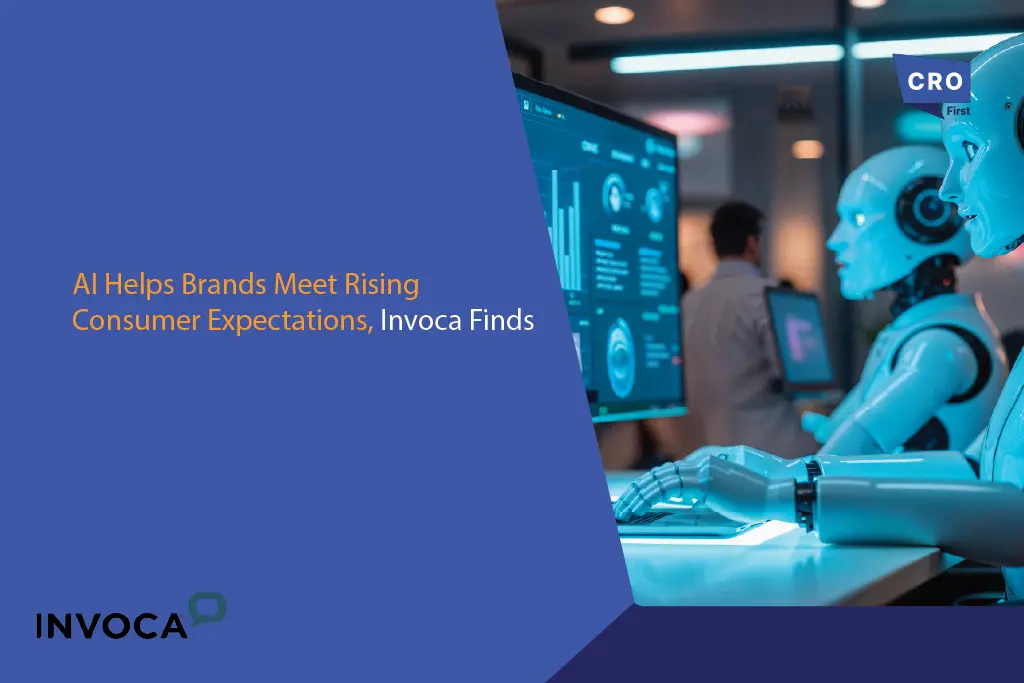
A significant operational challenge is reducing the earnings of companies even before artificial intelligence manages to attract potential customers. Among other things, the report on The B2C Buyer Experience in 2026, a global market study conducted by Invoca, a revenue execution leader, shows that a large majority of enterprise brands nowadays are not able to meet basic customer expectations for communication speed at the first point of contact.
The study that was done thoroughly so that it momentarily observed how consumers in the United States and the United Kingdom made their way through very important purchase decisions highlights a serious business fact: the speed difference is literally a revenue difference. In the situations where consumer-company interactions come to a halt because of slow response times from companies, customers regularly decide to abandon their intended purchases and switch to those competitors who act quickly and are more responsive.
Quantifying the Cost of Delays in High-Stakes Purchasing
The study reveals a stark disparity between consumer expectations for immediate engagement and the actual response times delivered by enterprise organizations. In today’s hyper-compressed digital environment, customer patience has thinned dramatically across both digital submission forms and traditional inbound phone channels.
Also Read: Lifemed and EXL Partner to Advance Revenue Cycle Automation
The rapid increase in callers abandoning long hold times-representing a 26-point jump in the US and a 28-point spike in the UK compared to previous annual metrics-presents an immediate financial risk for businesses. Invoca‘s broader data tracking, which covers over 60 million distinct phone conversations, confirms that phone interactions are primary conversion drivers. Across the board, roughly 37% of inbound telephone leads convert directly into a sale during the live call, with top-performing commercial sectors reaching conversion efficiency marks as high as 46%.
Brand Reputation and the Evolving Perception of Invisible AI
The research points out that as artificial intelligence becomes deeply woven into the modern consumer buying cycle, corporate brands must bear the reputational consequences of their technical systems. Modern shoppers draw no line between an automated tool and the enterprise that deployed it.
- Brand Accountability: When an AI-driven interaction breaks down or provides a poor experience, 38% of consumers place the blame squarely on the brand itself. Only 12% to 14% fault the underlying AI technology provider, with nearly two-thirds holding the brand responsible by a margin of greater than 3 to 1.
- Growing Consumer Approval: Despite these risks, overall sentiment toward conversational automation is rising as the technology matures. In the US, 46% of buyers report that AI has actively improved their purchasing journey (up from 42% in 2025), while those reporting a worse experience dropped down to 18%.
- The Rise of Invisible Automation: The data shows that high-quality AI has become virtually indistinguishable from human interaction. Currently, 63% of American consumers and 70% of British consumers can no longer accurately identify whether they are communicating with an automated AI agent or a live customer support representative.
- Striking the Strategic Balance: Transparency and Human Connection
While consumers lean into the rapid speed provided by automated workflows, they continue to demand distinct operational guardrails, explicit corporate honesty, and immediate paths to human escalations for complex, high-value financial investments.
“AI agents have graduated from experiments to a fundamental business requirement for brands,” said Peter Isaacson, CMO at Invoca. “Consumers expect speed at every turn, and AI can provide it at the most crucial moments when leads drop off and head to the competition. Without fast, smart AI engagement capabilities, you’re relegating yourself to second place.”
The roadmap for enterprise business execution requires a deliberate balance of automated scale and human empathy. According to the report data, 82% to 83% of buyers state it is highly important that a brand’s AI clearly discloses its automated identity from the outset. Furthermore, 83% of consumers place a premium on human connection when executing complex, high-stakes transactions, with nearly 60% preferring a live representative when both options are equally accessible.
Ultimately, maximizing marketing investments requires creating an uninterrupted, omni-channel ecosystem. Success hinges on connecting every stage of the funnel-from an initial digital ad click to AI chat interactions, and directly through to live phone conversations-ensuring that high-intent consumer demand never drops out of the pipeline.
Study Methodology
The B2C Buyer Experience Report 2026 was executed utilizing the Trycycle Gather conversational survey architecture. The comprehensive dataset analyzes specific responses from ,1356 validated consumers across the United States and the United Kingdom who actively researched, evaluated, and completed a high-stakes, high-value purchase within the past 12 months. The research spans seven core enterprise consumer verticals: automotive, healthcare, financial services, home services, insurance, telecommunications, and travel.