For decades, the primary objective of Revenue Management was data centralization. Organizations poured massive capital into Customer Relationship Management (CRM) ledgers and business intelligence tools to track pipeline health, account interactions, and conversion probabilities. Yet, as these systems expanded, an acute operational limitation emerged: the insight layer remained completely disconnected from the execution layer.
A sales director or account executive would review real-time deal risks, customer objections, or competitive threats inside a specialized revenue intelligence platform like Gong, but they would then have to toggle over to an entirely separate productivity ecosystem-such as Microsoft Outlook, Teams, or Dynamics 365-to write follow-ups, update forecasts, and coordinate remediation plans.
This constant app-switching introduced data latency, drained hours of active selling time through manual administrative data entry, and caused valuable deal signals to fall through the cracks of a fragmented digital workspace.
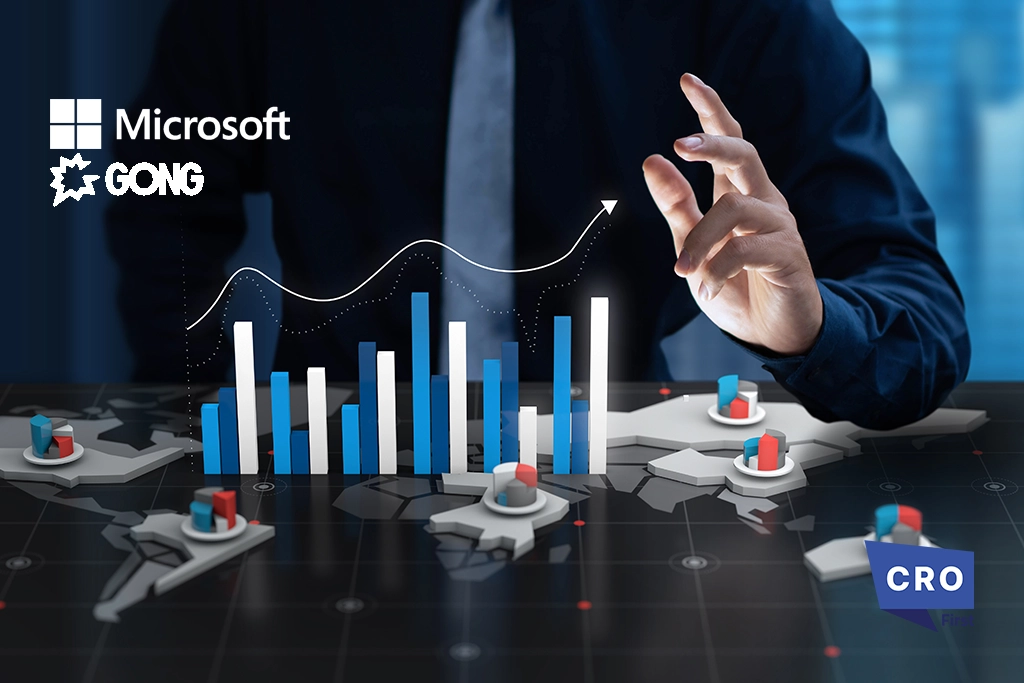
Dismantling this fragmentation, Gong’s expanded alliance with Microsoft leverages the open Model Context Protocol (MCP) to natively embed its Gong Revenue Graph within Microsoft 365 Copilot and Azure. By allowing Microsoft’s ambient workspace agents to securely query and action Gong’s specialized sales data in real time, this launch transforms the revenue stack. It transitions enterprise sales tech away from passive CRM tracking and pushes it into the era of ambient, autonomous revenue orchestration.
Under the Hood: Interoperable Execution via the Model Context Protocol
The core value proposition of the Gong-Microsoft integration lies in the critical distinction between simple API data syncing and native, context-grounded workflow automation. Historically, passing conversational text to a general-purpose language model yielded shallow results; a generic AI assistant could draft an email but lacked the granular account context required to reference specific buyer objections, exact pricing parameters, or real-time pipeline milestones.
Also Read: Impartner Expands HubSpot CRM Sync to Improve Partner Revenue Visibility
The integrated architecture targets this context gap by constructing a seamless, protocol-driven bridge between Microsoft’s daily enterprise interfaces and Gong’s deep interaction databases:
-
Autonomous Orchestration via MCP: Enterprises can natively hook Microsoft 365 Copilot directly into Gong’s specialized MCP Server. This allows Copilot to move past generic text creation and deliver highly tailored, audit-ready summaries, next steps, and deal actions derived straight from verified customer calls and emails across the company’s historical timeline.
-
Ambient Workspace Saturation: Critical revenue variables-such as competitive alerts, churn indicators, and cross-portfolio deal health flags-are injected directly into Microsoft Teams, Outlook, Dynamics 365 Sales, and Copilot Studio. Revenue teams can query their entire portfolio history using plain, conversational language without ever leaving their primary communication feeds.
-
Automated Data Enrichment: The system completely automates interaction capture. Instead of relying on manual representative compliance, customer touchpoints are programmatically structured and updated straight into Dynamics 365, instantly refreshing forecasting models with clean, unfiltered behavioral data.
“With Gong now available in Microsoft Marketplace, it’s easier for organizations to bring revenue AI directly into their workflows”, said Shane Evans, Chief Revenue Architect at Gong. “Microsoft is where revenue professionals get work done and where enterprises build their infrastructure on Azure. Gong’s Revenue AI OS brings purpose-built agents and revenue context into those environments to make them optimized for go-to-market teams. Gong partnering with Microsoft allows us to deliver the scale, security, and performance enterprises expect, while embedding revenue AI directly into the environments they already trust.”
The Macro Impact on the Revenue Management Industry
The convergence of Microsoft’s enterprise workspace dominance with Gong’s specialized revenue graph triggers a permanent restructuring of the go-to-market software landscape:
1. The Accelerated Obsolescence of Standalone CRM Data Entry
For over two decades, the primary metric of data health in Revenue Operations was the accuracy of a representative’s manual CRM updates. The programmatic synchronization of AI-structured conversation files directly into corporate databases like Dynamics 365 signals the extinction of manual data logging. When autonomous background systems can capture, summarize, and log client interactions automatically, the traditional CRM transforms from a rigid administrative input tool into a fluid, self-updating data lake.
2. The Standardization of Composable, Protocol-Driven Revenue Stacks
Historically, major enterprise software suites operated as walled gardens, forcing corporate technology leaders to buy expensive, single-vendor product stacks to maintain native compatibility. Gong’s deployment of open Model Context Protocol (MCP) servers to power Microsoft Copilot outlines a broader structural shift toward headless, composable architecture. The physical software interface a seller utilizes matters less than the specialized context layers running silently beneath it, accelerating the decline of monolithic software platforms.
Direct Effects on Corporate Enterprises and Revenue Operations
For enterprise sales divisions, multi-national corporations, and revenue operations departments, the collaborative framework requires fast strategic adjustment:
-
Radical Expansion of Revenue Capital Efficiency: Sales organizations routinely lose considerable chunks of their workweeks to administrative compliance, timeline syncing, and manual meeting preparation. Dynamic workflows allow revenue teams to slash labor waste, enabling account directors to dedicate their human capital to pipeline creation and high-value customer interactions.
-
Pristine Forecast Predictability and Execution Quality: Traditional forecasting algorithms frequently suffer from low predictive validity because they rely on biased, human-entered deal stage metrics. Grounding predictive systems directly in unmanipulated, real-time customer behavioral data and automated risk summaries allows finance and leadership teams to generate highly accurate, data-backed forecasts that corporate boards can securely underwrite.
-
Lowering Procurement Barriers and Optimizing Cloud Spend: Procurement teams can now acquire Gong’s specialized AI capabilities directly through their established enterprise relationships with Microsoft. This streamlined procurement model allows organizations to apply their software investments straight toward existing Microsoft Azure Consumption Commitments (MACC), maximizing capital efficiency and consolidating vendor governance under a single, trusted infrastructure ecosystem.
The Bottom Line
The expanded partnership between Gong and Microsoft demonstrates that the ultimate winner of the enterprise artificial intelligence race will not be the company with the most massive language model, but the platform that can deliver verified real-world context directly into the daily flow of work. Fusing a multi-million-record revenue graph with the world’s most ubiquitous corporate productivity suite turns raw customer interaction data into a highly responsive, competitive asset. For organizations looking to maximize their revenue acquisition, the strategic takeaway is clear: enterprises that implement open, protocol-driven data layers to ground their digital workforces will build exceptionally lean, high-velocity sales engines, while legacy teams stuck trailing behind with disconnected tools and fragmented manual databases will watch their pipelines continuously eroded by administrative drag.